Within Social Support
Accountability that does not feel like control
Support is more durable when it offers choices, rationale and respect instead of surveillance, comparison or moral judgement.
On this page
- The difference between structure and surveillance
- Autonomy, competence and relatedness in everyday support
- Phrases that protect dignity and next action
Page outline Jump by section
Introduction
Accountability helps self improvement when it protects a person’s ability to choose, learn and continue. It becomes counterproductive when it relies on shame, surveillance or threats to self-worth. The distinction matters because both approaches can increase effort in the short term, yet they create very different forms of motivation. Autonomy-supportive accountability helps people act for reasons they recognise as their own. Shame-based pressure pushes behaviour through fear of judgement, embarrassment or social exposure. Research based on Self-Determination Theory (SDT) consistently finds that environments supporting autonomy, competence and relatedness are associated with stronger and more sustainable motivation, while controlling forms of pressure tend to undermine the quality of motivation and long-term persistence.[PubMed]pubmed.ncbi.nlm.nih.govSelf-determination theory and the facilitation of intrinsic…Research guided by self-determination theory has focused on the soci…[Taylor & Francis Online]tandfonline.comTaylor & Francis OnlineA meta-analysis of self-determination theory-informed…by N Ntoumanis · 2021 · Cited by 1450 — The results of ef…
 Within social support, the question is therefore not whether accountability works, but what kind of accountability is being created. The most useful support makes the next action clearer and easier without turning the person’s identity into the thing being evaluated.
The difference between structure and surveillance
Many people confuse accountability with monitoring. In practice, these are different mechanisms.
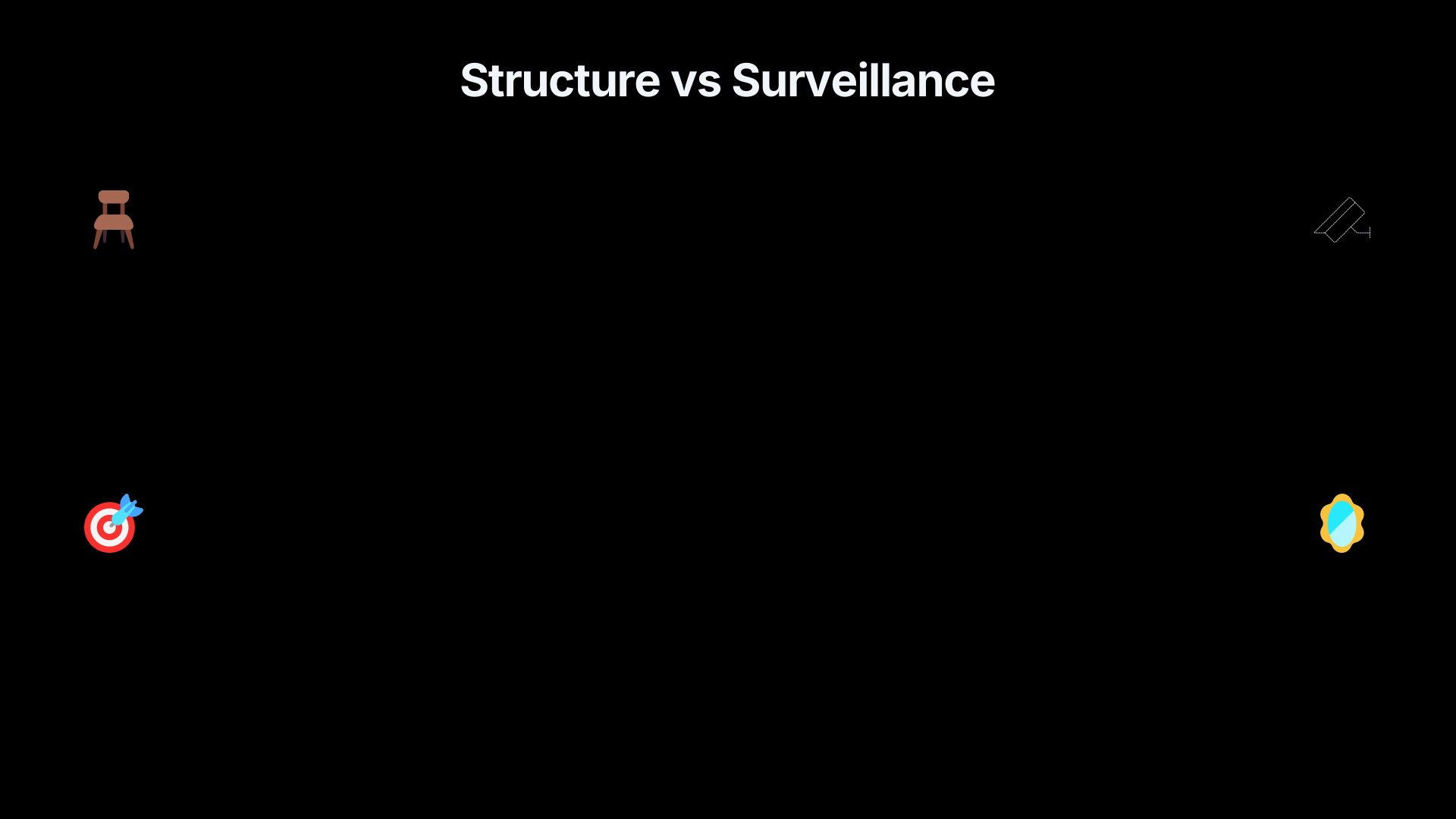
Structure creates conditions that support action. Surveillance creates conditions that make people feel watched. The first focuses attention on behaviour; the second often shifts attention towards managing impressions.
Consider two versions of the same arrangement:
- “You wanted to write three times this week. Shall we check in on Friday and see what got in the way if it didn’t happen?”
- “Send me proof every day or you’re obviously not committed.”
Both involve another person. Both create external expectations. Yet the psychological experience is very different.
Autonomy-supportive accountability provides a rationale, leaves room for choice, and treats setbacks as information. Controlling accountability relies on pressure, guilt, status threats or fear of disappointing others. SDT research distinguishes autonomous motivation from controlled motivation in precisely this way: behaviour may occur in both cases, but the underlying reason for acting differs. Autonomous motivation is linked to greater persistence and wellbeing, whereas controlled motivation depends more heavily on pressure and compliance. Frontiers[springer]link.springer.comspringer.comExercise, physical activity, and self-determination theoryby PJ Teixeira · 2012 · Cited by 4548 — SDT, however, conceptualize… This explains a common pattern in self-improvement efforts. People often perform well while someone is watching, then stop when the external pressure disappears. The accountability system succeeded at producing compliance but failed at helping the person internalise the behaviour.
Why autonomy support produces more durable change
Autonomy support is often misunderstood as being permissive or lacking standards. In reality, it combines expectations with respect.
Research within SDT identifies three psychological needs that support high-quality motivation:
- Autonomy: feeling that actions are chosen rather than imposed.
- Competence: feeling capable of making progress.
- Relatedness: feeling understood and supported by others.[Sage Journals]journals.sagepub.comIn SDT, these needs are conceived asSage JournalsApplying Self-Determination Theory to Educationby F Guay · 2022 · Cited by 881 — This theory proposes three psychological ne…[Frontiers]frontiersin.orgFrontiersApplying self-determination theory to behavior change…by R Gerstenberg · 2025 · Cited by 2 — The satisfaction of the three ba…
Good accountability strengthens all three at once.
Autonomy: preserving ownership
Ownership is maintained when support helps a person connect actions to their own goals and values. Offering options, asking questions and acknowledging difficulties all reinforce the sense that the individual remains the author of the change effort. SDT-informed interventions frequently use these techniques because they increase autonomous motivation and psychological need satisfaction.[PubMed]pubmed.ncbi.nlm.nih.govSelf-determination theory and the facilitation of intrinsic…Research guided by self-determination theory has focused on the soci…[Taylor & Francis Online]tandfonline.comTaylor & Francis OnlineA meta-analysis of self-determination theory-informed…by N Ntoumanis · 2021 · Cited by 1450 — The results of ef…
An accountability partner who asks, “Which option feels realistic this week?” supports autonomy. One who says, “You have to do this if you care about yourself,” attempts to replace it.
Competence: making success feel possible
People persist when they experience progress as achievable. Accountability that highlights effort, strategies and learning strengthens competence. Accountability that focuses on failure, comparison or personal inadequacy weakens it.
Research on autonomy-supportive coaching illustrates this mechanism. Process-focused feedback and autonomy-supportive interactions are associated with greater competence satisfaction and healthier development outcomes than controlling approaches.[PMC]pmc.ncbi.nlm.nih.govPMCThe Effects of Autonomy-supportive Coaching, Needby JD Coatsworth · 2009 · Cited by 358 — Results indicated that coaches' autonomy support, particularly via process-focused praise, pr…
When someone misses a target, competence-supportive accountability asks, “What obstacle showed up?” rather than, “What’s wrong with you?”
Relatedness: support without judgement
Relatedness is not merely social contact. It is the feeling that another person remains supportive even when performance is imperfect.
This is why some accountability groups become powerful while others become exhausting. A group that allows honesty about setbacks increases psychological safety. A group that rewards success and punishes struggle encourages concealment. People stop reporting failures because failure has become socially expensive.
The resulting behaviour can look like accountability while actually reducing learning.
Why shame changes the focus from action to identity
Shame and accountability are often confused because both involve evaluation. The critical difference is what is being evaluated.
Shame communicates, implicitly or explicitly, that the person is the problem. Accountability evaluates behaviour, decisions or strategies.
Psychological research consistently distinguishes shame from guilt. Guilt is typically linked to a specific action and often promotes repair or corrective effort. Shame is more likely to involve a negative judgement of the self as a whole and is frequently associated with withdrawal, hiding or avoidance. PMC[American Psychological Association]apa.orgAmerican Psychological AssociationWhat's the difference between guilt and shame?June Tangney, PhD, talks about the difference between sha…[PMC]pmc.ncbi.nlm.nih.govPMCReconsidering the Differences Between Shame and Guiltby M Miceli · 2018 · Cited by 255 — Shame implies perceived lack of power to meet the standards of one's ideal self, whereas guilt imp…
In self-improvement settings, shame-based pressure often sounds like:
- “You always give up.”
- “You clearly don’t want it enough.”
- “Everyone else can do this.”
- “You should be embarrassed.”
These statements do not identify a next step. They create a threat to identity.
A person experiencing shame may work harder for a period, but the motivation frequently becomes defensive. The goal shifts from learning and progress to escaping judgement. Studies examining shame suggest that it can generate desires for self-change, but it is also strongly linked to distancing, withdrawal and concealment.[PubMed]pubmed.ncbi.nlm.nih.govSelf-determination theory and the facilitation of intrinsic…Research guided by self-determination theory has focused on the soci…[Psychology Today]psychologytoday.comshame and motivation to changeJan 29, 2015 — the urge to distance oneself (wanting to hide or remove oneself from a shameful situation). They found that shame "was uni…
This creates a paradox. The more accountability depends on public embarrassment, the more likely people become to hide information that would actually help them improve.

The hidden costs of shame-based accountability
Shame-based systems often appear effective at first because they create urgency.
The longer-term costs are less visible:
Reduced honesty. People report what protects their image rather than what actually happened.
All-or-nothing thinking. One lapse becomes evidence of personal failure instead of a normal part of behaviour change.
Dependence on external pressure. Action continues only while scrutiny remains high.
Avoidance. Missed goals become emotionally costly, making re-engagement harder.
Fragile motivation. The person’s effort becomes tied to approval rather than personal values.[Yu-kai Chou]yukaichou.comself determination theory guide to ryan and decis motivation frameworkSelf-Determination Theory: All 6 Mini-Theories6 May 2026 — Instead of an external authority applying pressure, the person applies pressur…[PubMed]pubmed.ncbi.nlm.nih.govSelf-determination theory and the facilitation of intrinsic…Research guided by self-determination theory has focused on the soci…[Frontiers]frontiersin.orgFrontiersApplying self-determination theory to behavior change…by R Gerstenberg · 2025 · Cited by 2 — The satisfaction of the three ba…
These effects help explain why highly controlling accountability systems can generate bursts of performance yet struggle to produce lasting habits.
Phrases that protect dignity and next action
The language of accountability matters because it signals whether support is collaborative or controlling.
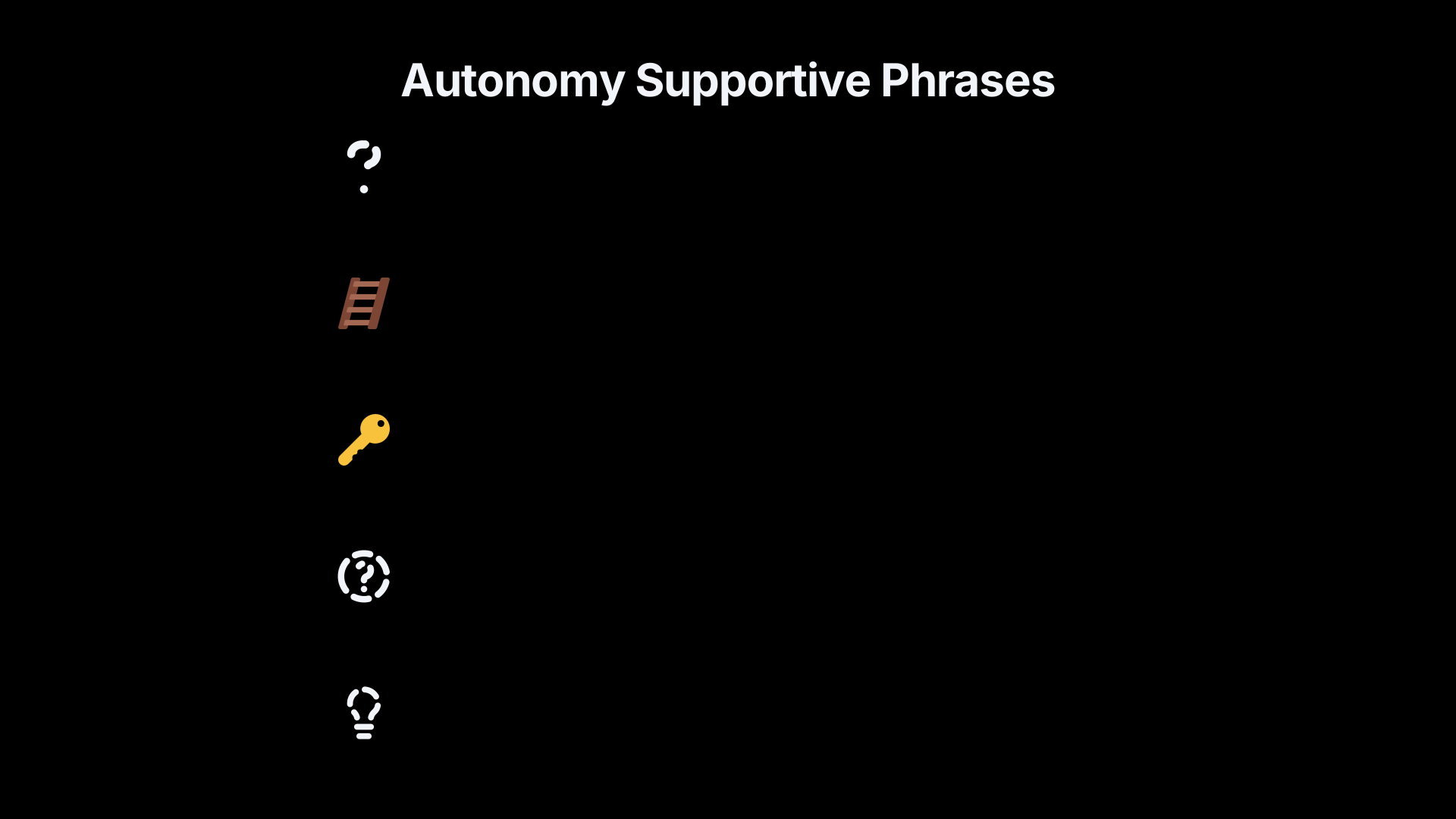
Autonomy-supportive phrases tend to combine respect with structure:
- “You said this mattered to you. What feels like the next manageable step?”
- “What got in the way?”
- “Would it help to adjust the plan?”
- “Which option do you want to try?”
- “How can I support you this week?”
- “What did you learn from that attempt?”
These questions preserve agency while keeping attention on behaviour.
By contrast, shame-based phrases often communicate judgement:
- “You have no discipline.”
- “You’re making excuses.”
- “Everyone else manages.”
- “You failed again.”
- “Prove you’re serious.”
The first set encourages reflection and problem-solving. The second encourages self-defence.
A useful rule is that accountability conversations should end with a clearer next action, not a harsher verdict on the person.
What autonomy-supportive accountability looks like in practice
The most effective accountability arrangements usually share a few characteristics:
- Goals are chosen, not imposed.
- Expectations are clear.
- Check-ins focus on behaviour and obstacles.
- Progress is discussed without moral judgement.
- Adjustments are allowed when circumstances change.
- The relationship remains respectful regardless of performance.
In practical terms, this means a study partner who asks whether today’s work block happened, then helps troubleshoot barriers if it did not. It means a walking partner who notices missed sessions without turning them into character assessments. It means a coach, friend or colleague who holds standards while preserving dignity.
The central mechanism is simple: accountability works best when it strengthens self-direction rather than replacing it. Support becomes durable when it helps people return to the behaviour after setbacks instead of making them feel that setbacks have exposed a personal flaw. Autonomy-supportive accountability creates structure around action while leaving ownership exactly where it needs to remain—with the person making the change.
Amazon book picks
Further Reading
Books and field guides related to Accountability that does not feel like control. Use these as the next step if you want deeper reading beyond the article.
Mindset
Rating: 4.5/5 from 11 Google Books ratings
Supports dignity-preserving feedback and learning-focused support.
Punished by Rewards
Examines how controlling accountability can undermine intrinsic motivation.
Atomic Habits
Rating: 3.5/5 from 7 Google Books ratings
Focuses on systems and environment rather than shame-based pressure.
eBay marketplace picks
Marketplace Samples
Example marketplace items related to this page. Use the search link to explore similar finds on eBay.




Endnotes
1.
Source: link.springer.com
Link:https://link.springer.com/article/10.1186/1479
Source snippet
springer.comExercise, physical activity, and self-determination theoryby PJ Teixeira · 2012 · Cited by 4548 — SDT, however, conceptualize...
2.
Source: pmc.ncbi.nlm.nih.gov
Title: PMCThe Effects of Autonomy-supportive Coaching, Need
Link:https://pmc.ncbi.nlm.nih.gov/articles/PMC4410092/
Source snippet
by JD Coatsworth · 2009 · Cited by 358 — Results indicated that coaches' autonomy support, particularly via process-focused praise, pr...
3.
Source: pmc.ncbi.nlm.nih.gov
Title: PMCReconsidering the Differences Between Shame and Guilt
Link:https://pmc.ncbi.nlm.nih.gov/articles/PMC6143989/
Source snippet
by M Miceli · 2018 · Cited by 255 — Shame implies perceived lack of power to meet the standards of one's ideal self, whereas guilt imp...
4.
Source: pmc.ncbi.nlm.nih.gov
Title: PMCShame Withdraws, Guilt Corrects
Link:https://pmc.ncbi.nlm.nih.gov/articles/PMC12189037/
Source snippet
Withdraws, Guilt Corrects - PMC - NIHby RW Semaan · 2025 · Cited by 5 — This research aims to explain how two equally valenced emotions...
5.
Source: pubmed.ncbi.nlm.nih.gov
Link:https://pubmed.ncbi.nlm.nih.gov/11392867/
Source snippet
Self-determination theory and the facilitation of intrinsic...Research guided by self-determination theory has focused on the soci...
6.
Source: tandfonline.com
Link:https://www.tandfonline.com/doi/full/10.1080/17437199.2020.1718529
Source snippet
Taylor & Francis OnlineA meta-analysis of self-determination theory-informed...by N Ntoumanis · 2021 · Cited by 1450 — The results of ef...
7.
Source: pubmed.ncbi.nlm.nih.gov
Link:https://pubmed.ncbi.nlm.nih.gov/26168470/
Source snippet
Self-Determination Theory Applied to Health Contextsby JYY Ng · 2012 · Cited by 2943 — A meta-analysis evaluated relations between...
8.
Source: frontiersin.org
Link:https://www.frontiersin.org/journals/psychology/articles/10.3389/fpsyg.2025.1634267/full
Source snippet
FrontiersApplying self-determination theory to behavior change...by R Gerstenberg · 2025 · Cited by 2 — The satisfaction of the three ba...
9.
Source: journals.sagepub.com
Title: In SDT, these needs are conceived as
Link:https://journals.sagepub.com/doi/10.1177/08295735211055355
Source snippet
Sage JournalsApplying Self-Determination Theory to Educationby F Guay · 2022 · Cited by 881 — This theory proposes three psychological ne...
10.
Source: pubmed.ncbi.nlm.nih.gov
Link:https://pubmed.ncbi.nlm.nih.gov/30295176/
Source snippet
A meta-analysis of techniques to promote motivation for...by FB Gillison · 2019 · Cited by 641 — A systematic review and meta-anal...
11.
Source: apa.org
Link:https://www.apa.org/news/podcasts/speaking-of-psychology/guilt-shame
Source snippet
American Psychological AssociationWhat's the difference between guilt and shame?June Tangney, PhD, talks about the difference between sha...
12.
Source: frontiersin.org
Link:https://www.frontiersin.org/journals/psychology/articles/10.3389/fpsyg.2025.1678930/full
Source snippet
Understanding shame, guilt, embarrassment and prideby D Singh · 2025 · Cited by 2 — For example, guilt is more specific to one's actions...
13.
Source: pubmed.ncbi.nlm.nih.gov
Link:https://pubmed.ncbi.nlm.nih.gov/25401288/
Source snippet
Shame and the motivation to change the selfby B Lickel · 2014 · Cited by 264 — We report 2 studies examining people's lived experie...
14.
Source: psychologytoday.com
Title: shame and motivation to change
Link:https://www.psychologytoday.com/ca/blog/creative-synthesis/201501/shame-and-motivation-to-change
Source snippet
Jan 29, 2015 — the urge to distance oneself (wanting to hide or remove oneself from a shameful situation). They found that shame "was uni...
15.
Source: yukaichou.com
Title: self determination theory guide to ryan and decis motivation framework
Link:https://yukaichou.com/gamification-analysis/self-determination-theory-guide-to-ryan-and-decis-motivation-framework/
Source snippet
Self-Determination Theory: All 6 Mini-Theories6 May 2026 — Instead of an external authority applying pressure, the person applies pressur...
Published: May 2026
16.
Source: pubmed.ncbi.nlm.nih.gov
Link:https://pubmed.ncbi.nlm.nih.gov/32437175/
Source snippet
nih.govSelf-determination theory interventions for health behavior...by P Sheeran · 2020 · Cited by 228 — The present review indicates t...
17.
Source: next.co.uk
Link:https://www.next.co.uk/shop/brand-self-0
18.
Source: sciencedirect.com
Title: Self-Determination Theory
Link:https://www.sciencedirect.com/topics/social-sciences/self-determination-theory
Source snippet
an overviewSelf-determination theory is defined as a framework that explores the relationship between personality, human motivation, and...
19.
Source: psychologytoday.com
Title: shame and motivation to change
Link:https://www.psychologytoday.com/us/blog/creative-synthesis/201501/shame-and-motivation-to-change
Source snippet
Jan 29, 2015 — Feeling shame was a stronger predictor than guilt or regret for motivation for positive self-change...
Additional References
20.
Source: ukcoaching.org
Link:https://www.ukcoaching.org/ukc-club/resources/self-determination-theory/
Source snippet
Self-Determination TheorySelf-Determination Theory emphasises that people are most motivated and fulfilled when their basic needs for aut...
21.
Source: psychwire.com
Link:https://psychwire.com/free-resources/q-and-a/f6wzti/the-upside-of-shame
22.
Source: rccs.org.uk
Link:https://www.rccs.org.uk/post/autonomy-competence-and-relatedness-understanding-the-three-universal-needs-of-self-determination
Source snippet
Autonomy Competence and Relatedness – RCCS6 Feb 2026 — The concept of basic psychological needs is central to Self-Determination Theory...
23.
Source: socialidentitylab.psych.ubc.ca
Link:https://socialidentitylab.psych.ubc.ca/research/shame-and-guilt/
Source snippet
and Guilt | UBC Social Identity LabShame rather than guilt can be a maladaptive emotional reaction because it predicts a desire to avoid...
24.
Source: youtube.com
Link:https://www.youtube.com/watch?v=_juPDoa3GBY
Source snippet
Self-Determination Theory ExplainedSelf-determination Theory argues that we do what we do because we are motivated by three basic needs t...
25.
Source: experts.umn.edu
Title: self determination theory interventions for health behavior chang
Link:https://experts.umn.edu/en/publications/self-determination-theory-interventions-for-health-behavior-chang/
Source snippet
umn.eduSelf-determination theory interventions for health behavior...by P Sheeran · 2020 · Cited by 223 — OBJECTIVE: We conducted a meta...
26.
Source: allactive.co.uk
Title: self determination theory and health behaviour change
Link:https://allactive.co.uk/2026/05/19/self-determination-theory-and-health-behaviour-change/
Source snippet
Self-Determination Theory and health behaviour change19 May 2026 — Interventions that train practitioners in autonomy-supportive techniqu...
Published: May 2026
27.
Source: scribd.com
Link:https://www.scribd.com/document/650804963/9781108677318-008
Source snippet
nd engagement by encouraging feelings of autonomy, competence, and...Read more...
28.
Source: keithedwards.com
Title: guilt vs shame in fostering greater accountability
Link:https://keithedwards.com/2012/10/30/guilt-vs-shame-in-fostering-greater-accountability/
Source snippet
Oct 30, 2012 — Dr Keith Edwards discusses the differences in Guilt vs Shame, and how focus on greater accountability for people's inappro...
29.
Source: verywellmind.com
Title: what is self determination theory 2795387
Link:https://www.verywellmind.com/what-is-self-determination-theory-2795387
Source snippet
How Self-Determination Theory Explains Motivation29 Oct 2025 — Self-determination theory suggests that fulfilling the core needs for auto...
Topic Tree